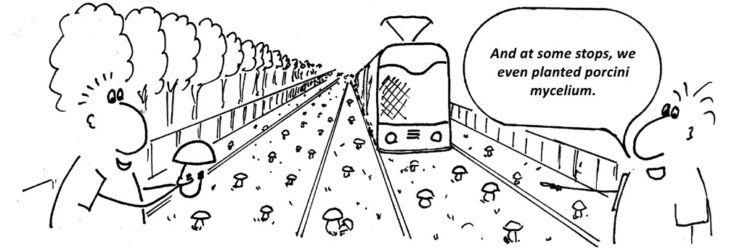
– In Warsaw, green tram tracks are appearing more and more often. Just a decade or two ago, this type of solution was still relatively uncommon.
– That’s right. Today, green tram tracks are seen as part of modern urban infrastructure. They still serve their primary transport function, but they also bring environmental and visual benefits to the city.
– You can clearly see this in some of the newer tram investments. Along the rout to Wilanów, for example, or on Gagarina Street, long sections of track are now covered with vegetation.
– Warsaw has been expanding these solutions quite actively. But similar projects are also appearing in other cities – including Wrocław, Kraków, and Poznań. In many places, green tram tracks are gradually becoming the standard for new tram lines.
– So it’s not just about making the city look greener?
– Not at all. Vegetation along the tracks helps reduce surface temperatures in dense urban areas, limits dust, and improves rainwater retention. In practice, it affects the microclimate of the entire street and makes the surrounding space more comfortable for residents.
– From an engineering perspective, how does the structure of a green tram track differ from a conventional one? – The basic track structure remains largely the same, but an additional vegetation layer is introduced. Above the structural base of the track, drainage and filtration layers are installed to manage excess water and provide stable conditions for plant growth. On top of that sits the vegetation substrate and finally the plant layer – most commonly sedum or grass. In many modern projects, this is combined with slab-track systems designed to ensure proper load distribution and long-term structural stability.
– Sedum seems to be used quite frequently. Why is that?
– Mainly because of its resilience. Sedum tolerates drought well, handles strong sunlight, and requires relatively little maintenance. That makes it well suited for demanding urban conditions.
– Does this type of structure affect how the track performs in operation?
– Yes, it can. The vegetation layer and the supporting structure help reduce vibrations and partially dampen noise generated by passing trams. That’s particularly important in densely built-up neighborhoods. At the same time, engineers must ensure that the additional layers do not compromise track geometry or maintenance access.
– What about drainage? I imagine that must be critical.
– It is. The structure has to remove excess water efficiently while still allowing part of it to be retained within the vegetation layer. In this way, green tram tracks can slow down stormwater runoff and reduce pressure on the sewer system.
– So they also contribute to urban water management.
– Exactly. During heavy rainfall, part of the water is temporarily retained in the substrate and released gradually. On a citywide scale, that can noticeably ease the load on drainage infrastructure.
– Are there situations where green tram tracks might not be the right solution?
– The biggest challenge is proper design – especially when it comes to structure and drainage. Local conditions such as sunlight exposure, water availability, and tram traffic intensity all need to be considered. Not every location will be suitable.
– Even so, it looks like we’ll be seeing more and more green tracks in the future.
– Very likely. They combine transport infrastructure with improvements to urban space and help cities adapt to a changing climate.
Zielone torowiska w miastach
– W Warszawie coraz częściej pojawiają się zielone torowiska. Jeszcze kilkanaście lat temu było to raczej rzadko spotykane rozwiązanie.
– To prawda. Dziś zielone torowiska są postrzegane jako element nowoczesnej infrastruktury miejskiej. Oprócz funkcji transportowej pełnią także rolę środowiskową i estetyczną.
– Widać to szczególnie przy nowych inwestycjach tramwajowych. Na przykład na trasie do Wilanowa czy na ulicy Gagarina długie odcinki torowisk zostały obsadzone roślinnością.
– Warszawa rzeczywiście intensywnie rozwija takie rozwiązania. Podobne projekty pojawiają się jednak również w innych miastach, m.in. we Wrocławiu, Krakowie czy Poznaniu. W wielu miejscach zielone torowiska stają się stopniowo standardem przy nowych inwestycjach tramwajowych.
– Czyli nie chodzi tylko o to, żeby miasto wyglądało bardziej zielono?
– Zdecydowanie nie. Roślinność na torowisku pomaga ograniczać nagrzewanie się powierzchni w gęsto zabudowanych obszarach, zmniejsza zapylenie i poprawia retencję wód opadowych. W praktyce wpływa to na mikroklimat całej ulicy i poprawia komfort mieszkańców.
– A jak wygląda konstrukcja takiego torowiska od strony technicznej? Czy bardzo różni się od tradycyjnego?
– Podstawowa konstrukcja torowa pozostaje podobna, ale pojawia się dodatkowa warstwa wegetacyjna. Nad konstrukcją nośną toru stosuje się warstwy drenażowe i filtracyjne, które umożliwiają odprowadzenie nadmiaru wody oraz zapewniają stabilne warunki wzrostu roślin. Na górze znajduje się podłoże wegetacyjne, a następnie warstwa roślinna – najczęściej z rozchodników lub trawy. W wielu nowoczesnych realizacjach rozwiązanie to łączy się z torowiskami bezpodsypkowymi, które zapewniają równomierne przenoszenie obciążeń i długotrwałą stabilność konstrukcji.
– Rozchodniki pojawiają się bardzo często. Dlaczego właśnie one?
– Przede wszystkim ze względu na odporność. Rozchodniki dobrze znoszą suszę, silne nasłonecznienie i wymagają stosunkowo niewielkiej pielęgnacji. Dzięki temu zielone torowiska mogą funkcjonować stabilnie nawet w wymagających warunkach miejskich.
– Czy taka konstrukcja wpływa także na parametry eksploatacyjne torowiska?
– Tak. Warstwa roślinna oraz odpowiednio zaprojektowana konstrukcja pomagają ograniczać drgania i częściowo tłumić hałas generowany przez przejeżdżające tramwaje. Ma to duże znaczenie zwłaszcza w gęsto zabudowanych dzielnicach. Jednocześnie projektanci muszą zadbać o to, aby dodatkowe warstwy nie wpływały negatywnie na geometrię toru ani nie utrudniały prac utrzymaniowych.
– A jak wygląda kwestia odwodnienia?
– To jeden z kluczowych elementów projektu. Konstrukcja torowiska musi zapewniać skuteczne odprowadzenie nadmiaru wody, a jednocześnie umożliwiać jej częściową retencję w warstwie wegetacyjnej. Dzięki temu zielone torowiska spowalniają odpływ wód opadowych do kanalizacji.
– Czyli mogą wspierać także gospodarkę wodną miasta?
– Dokładnie tak. Podczas intensywnych opadów część wody jest zatrzymywana w podłożu i oddawana W skali miasta może to zauważalnie odciążać system odwodnienia.
– Czy są sytuacje, w których zielone torowiska nie będą dobrym rozwiązaniem?
– Największym wyzwaniem jest właściwe zaprojektowanie konstrukcji i odwodnienia oraz dostosowanie ich do lokalnych warunków: nasłonecznienia, dostępności wody czy intensywności ruchu tramwajowego. Nie każda lokalizacja będzie odpowiednia.
– Mimo to wygląda na to, że w przyszłości będziemy widzieć coraz więcej zielonych torowisk.
– Wszystko na to wskazuje. Łączą one funkcję transportową z poprawą jakości przestrzeni miejskiej i wspierają działania związane z adaptacją miast do zmian klimatu.
Słowniczek/Vocabulary
green tram track – zielone torowisko tramwajowe
tram track structure – konstrukcja torowiska tramwajowego
track slab/slab track – torowisko bezpodsypkowe/płyta torowa
vegetation layer – warstwa roślinna
vegetation substrate – podłoże wegetacyjne
sedum mat – mata rozchodnikowa
drainage layer – warstwa drenażowa
filtration layer – warstwa filtracyjna
rainwater retention – retencja wód opadowych
stormwater runoff – spływ wód opadowych
urban microclimate – mikroklimat miejski
vibration reduction – ograniczenie drgań
noise reduction – ograniczenie hałasu
dust reduction – ograniczenie zapylenia
load distribution – rozkład obciążeń
track geometry – geometria toru
track maintenance – utrzymanie torowiska
urban infrastructure – infrastruktura miejska
climate adaptation – adaptacja do zmian klimatu
Użyteczne zwroty/Useful phrases
Green tram tracks are becoming more common in many cities. – Zielone torowiska tramwajowe pojawiają się w coraz większej liczbie miast.
This solution brings both environmental and urban benefits. – To rozwiązanie przynosi korzyści środowiskowe i urbanistyczne.
It improves the microclimate of the surrounding area. – Poprawia mikroklimat otoczenia.
From an engineering perspective… – Z punktu widzenia inżynierskiego…
The track structure includes drainage and filtration layers. – Konstrukcja torowiska obejmuje warstwy drenażowe i filtracyjne.
Proper drainage is a key part of the design. – Prawidłowe odwodnienie jest kluczowym elementem projektu.
Vegetation helps reduce noise and vibrations. – Roślinność pomaga ograniczać hałas i drgania.
Local conditions must be taken into account. – Należy uwzględnić lokalne warunki.
Przygotowała Magdalena Marcinkowska